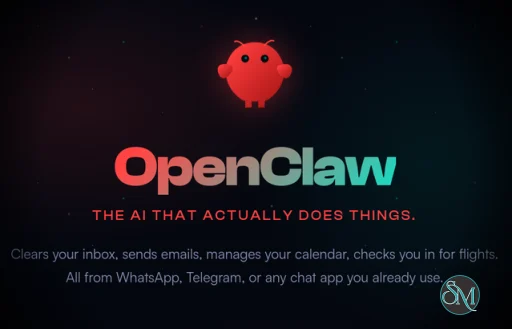
OpenClaw, formerly known as Clawd Bot, stands out as one of the most exciting open-source personal AI assistants available in 2026. This powerful tool brings advanced AI capabilities directly into your daily messaging apps, letting you chat with a smart assistant that actually gets things done. Whether you want to manage emails, write code, or stay organized across platforms, OpenClaw delivers a seamless experience while keeping your data under your control.
What Is OpenClaw?
OpenClaw is an open-source, self-hosted AI personal assistant that runs on your own devices or a cloud server. Created by developer Peter Steinberger, it first gained massive attention under the name Clawd Bot before rebranding to OpenClaw on January 27, 2026. The name change came after Anthropic raised trademark concerns related to similarities with their Claude AI model. The shift to OpenClaw symbolizes growth and adaptation, much like a lobster molting its shell to grow bigger and stronger.
The project exploded in popularity thanks to its innovative approach. It integrates deeply with the messaging apps you already use every day, turning them into a gateway for interacting with advanced AI. With over 30,000 GitHub stars, a thriving Discord community of thousands, and contributions from hundreds of developers, OpenClaw has quickly become a favorite among tech enthusiasts and productivity seekers.
Download OpenClaw (formerly Moltbot/ClawdBot) 2026.6.10 - Software Mirrors |
|---|
openclaw-2026.6.10-dependency-evidence.zip | 63.12 kB OpenClaw-2026.6.10.dmg | 39.12 MB OpenClaw-2026.6.10.dSYM.zip | 37.47 MB OpenClaw-2026.6.10.zip | 53.52 MB OpenClawCompanion-Setup-arm64.exe | 154.71 MB OpenClawCompanion-Setup-x64.exe | 170.76 MB |
OpenClaw (formerly Moltbot/ClawdBot) 2026.6.10 Release Notes: Automatic fast mode starts short conversations quickly, then returns longer or fallback work to normal mode without losing visible state. Provider routing, channel progress, session identity, and trusted tool policies are more reliable, with smaller improvements spanning provider setup, diagnostics, and transcript tooling.
Highlights
Automatic fast mode
- Adds
/fast auto so short conversational calls can start quickly, while longer or fallback work returns to normal mode with the effective state still visible. PR #85104, Issue #85087. Thanks @alexph-dev and @vincentkoc.
- Shows the effective automatic fast-mode state in status instead of reducing it to on/off, and avoids carrying a cleared Codex service-tier choice into later runs. 8845f2f. Thanks @vincentkoc.
- Keeps automatic fast-mode timing consistent when a turn switches to a fallback model. 075091d. Thanks @vincentkoc.
- Keeps the original fast-mode timing and progress behavior when a live model switch retries a turn. d1e190f. Thanks @vincentkoc.
- Keeps automatic fast-mode progress and reset behavior distinct from explicit fast mode after a run switches modes. 20aec98. Thanks @vincentkoc.
- Shows the effective fast-mode value in connected-agent sessions instead of the configured value, so status reflects what the session is actually using. 9509aa0. Thanks @vincentkoc.
- Keeps the effective automatic fast-mode setting visible through fallback transitions in connected-agent sessions. 7f5423c. Thanks @vincentkoc.
- Keeps automatic fast-mode timing and progress consistent when reply and scheduled-agent runs retry or switch models. 6c29f88. Thanks @vincentkoc.
- Keeps fast-mode cleanup and status consistent when a run switches between fallback models. c4694f8. Thanks @vincentkoc.
- Shows the automatic fast-mode reset only when fallback work is finished, so status messages match the end of the transition. f4d93c8. Thanks @vincentkoc.
- Shows reset and delivery progress at the right time when auto-reply or other follow-up runs retry or leave automatic fast mode. 684e440. Thanks @vincentkoc.
Channels and Messaging
Channel delivery and progress updates
- Prevents the next turn after a scheduled message from losing what was delivered or whether delivery failed, so replies can use that context without exposing cron details in the channel. PR #93580. Thanks @jalehman and @scotthuang.
- Prevents streamed channel progress from dropping a repeated status that represents a separate step, so each meaningful step remains visible in the draft. 2d42e52. Thanks @vincentkoc.
- Prevents keyed streamed progress from staying on an older status, so viewers see the latest state instead of stale text. 8bb6472. Thanks @vincentkoc.
Providers and Models
Provider model catalogs and reasoning controls
- Treats Zhipu/GLM overload responses as overloads, so a configured fallback is selected for the right reason instead of following the wrong failover path. PR #93241, Issue #93211. Thanks @0xghost42 and @zhengli0922.
- Prevents Telegram, Slack, and Discord
/think menus for live Ollama models from hiding supported levels, so users can choose valid reasoning settings without guessing. PR #94067, Issue #93835. Thanks @civiltox and @openperf.
- Prevents bundled Z.ai GLM-5 models from falling through to OpenAI and producing misleading API-key errors, so they use Z.AI by default. PR #94461, Issue #94269. Thanks @chrysb and @pandah97.
- Adds GLM-5.2 and Kimi K2.7 Code to the OpenCode Go catalog with current limits, so users can select the models from OpenClaw. 66f84a9. Thanks @samson1357924.
- Corrects
kimi-k2.7-code capability listings so OpenCode Go users are not offered unsupported video prompts when the model accepts text and images. 715dc71.
Provider plugin onboarding
- Prevents first-run setup from skipping the selected provider's credential prompt after plugin installation, so onboarding continues with that provider instead of falling back to OpenAI. PR #95792, Issue #95765. Thanks @snowzlmbot.
Memory, Sessions, and State
Session transcript SDK helpers
Cross-channel session identity
- Prevents a shared direct-message session from carrying the previous channel's identity after a switch, so status, reactions, threads, and message references target the current channel. PR #95328, Issue #95325. Thanks @gorkem2020, @jalehman, and @zengwen-dt.
Gateway, Security, and Trust
Prompt context boundaries
- Keeps empty prompts separate from hook-added context during compaction or session reuse in Copilot and Codex sessions, so prompt boundaries remain consistent. PR #94838. Thanks @vincentkoc.
Trusted tool policy enforcement
Trusted package redirects
- Prevents authenticated package-source tokens from being sent to an allowed redirect on another origin, while the valid redirected download still completes. b0df6dc.
Clients and Interfaces
Docker and Podman setup timeouts
- Prevents Docker and Podman setup from running unbounded on hosts where GNU timeout is installed as
gtimeout, so image pulls, builds, and detached startup receive the intended guard. 62b2e9e.
Plugins, Packaging, and QA
Codex service-tier clearing
- Prevents cleared Codex service tiers from being persisted as explicit stale state, so resumed or switched conversations use the normal default instead. cd32d9f. Thanks @vincentkoc.
StepFun provider installation
Docs and Operator Workflows
Doctor check ordering
- Keeps core
openclaw doctor diagnostics in their normal order before extension checks, making lint and repair output easier to follow. PR #86627. Thanks @giodl73-repo.
Release verification
- npm package: https://www.npmjs.com/package/openclaw/v/2026.6.10
- registry tarball: https://registry.npmjs.org/openclaw/-/openclaw-2026.6.10.tgz
- integrity:
sha512-LcooND2tBQw8A+kc1Ujltu3lg30bJ0w7XaeRy7eYzobb8BBdcW6DOGbwJL4vpj1vl9+gjRceOtlh5nh9OARcug==
- release SHA:
aa69b12d0086b631b139c1435c9621a5783e3a40
- full release CI report: https://github.com/openclaw/releases/blob/main/evidence/2026.6.10/release-evidence.md
- release publish: https://github.com/openclaw/openclaw/actions/runs/28071368306
- npm preflight: https://github.com/openclaw/openclaw/actions/runs/28068484614
- full release validation: https://github.com/openclaw/openclaw/actions/runs/28068476120
- plugin npm publish: https://github.com/openclaw/openclaw/actions/runs/28071564667
- plugin ClawHub publish: https://github.com/openclaw/openclaw/actions/runs/28071565774
- plugin ClawHub bootstrap: not needed
- OpenClaw npm publish: https://github.com/openclaw/openclaw/actions/runs/28071984141
- npm Telegram beta E2E: not supplied
- Windows Hub promotion: https://github.com/openclaw/openclaw/actions/runs/28072271374 from openclaw/openclaw-windows-node@v0.6.3
|
Key Features of OpenClaw
OpenClaw goes far beyond simple chat responses. It acts as an active agent that can handle real tasks, remember context across sessions, and even reach out to you proactively.
Here are some of its standout features:
Multi-channel support: Connects to WhatsApp, Telegram, Discord, Slack, Signal, iMessage, Microsoft Teams, Matrix, Google Chat, and more. You get one unified conversation that persists no matter which app you use.
Proactive assistance: Unlike passive chatbots, OpenClaw can send you messages first with reminders, alerts, morning briefings, or updates when something important happens.
Persistent memory: It remembers everything from past interactions, so you never have to repeat context when picking up unfinished work.
Powerful integrations: Links to tools for email management (like Gmail triage, drafting replies, or unsubscribing), code editing in IDEs, calendar handling, and custom skills you can build or download.
Voice and text input: Send voice notes on supported apps for transcription and processing, with more audio features in development.
Self-hosted privacy: Run it locally on your Mac, Linux machine, or a cloud droplet. Your data stays with you instead of feeding into big cloud AI services.
Easy onboarding: The CLI wizard (openclaw onboard) guides you through setup, including daemon installation for always-on access.
Developers love using it for coding tasks, where it can fix tests, generate full-stack features, or compile research notes. Everyday users appreciate inbox zero automation, smart replies, and consolidated messaging from multiple platforms.
How to Get Started with OpenClaw
One-liner
#for macOS/linux
curl -fsSL https://openclaw.ai/install.sh | bash

#for Windows
powershell -c "irm https://openclaw.ai/install.ps1 | iex"
npm
npm i -g openclaw
openclaw onboard
pnpm
pnpm add -g openclaw
openclaw onboard
Many run it on a home machine for privacy or on a cheap cloud server for 24/7 access. Once live, add OpenClaw as a contact in WhatsApp or invite the bot to your Discord server, then start chatting.
OpenClaw represents the next step in personal AI. It combines large language model smarts with real-world action, persistent context, and deep system access in a way few tools do. You get an assistant that lives in your existing apps, handles routine tasks autonomously, and evolves with community contributions.
If you value privacy, customization, and true productivity boosts, OpenClaw deserves a spot in your workflow. Head to the official site at https://openclaw.ai/, check the docs at https://docs.openclaw.ai/, or join the active Discord to see what others are building. The future of personal AI assistants looks a lot like OpenClaw, and it's already here for anyone ready to self-host it.
Post a Comment/Report Broken Link: