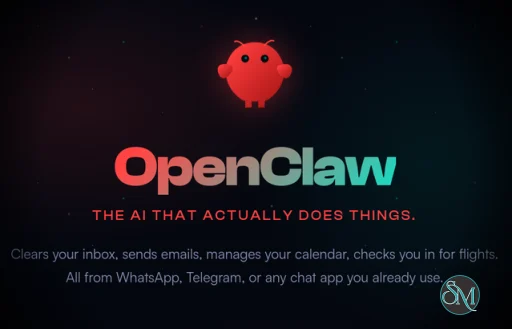
OpenClaw, formerly known as Clawd Bot, stands out as one of the most exciting open-source personal AI assistants available in 2026. This powerful tool brings advanced AI capabilities directly into your daily messaging apps, letting you chat with a smart assistant that actually gets things done. Whether you want to manage emails, write code, or stay organized across platforms, OpenClaw delivers a seamless experience while keeping your data under your control.
What Is OpenClaw?
OpenClaw is an open-source, self-hosted AI personal assistant that runs on your own devices or a cloud server. Created by developer Peter Steinberger, it first gained massive attention under the name Clawd Bot before rebranding to OpenClaw on January 27, 2026. The name change came after Anthropic raised trademark concerns related to similarities with their Claude AI model. The shift to OpenClaw symbolizes growth and adaptation, much like a lobster molting its shell to grow bigger and stronger.
The project exploded in popularity thanks to its innovative approach. It integrates deeply with the messaging apps you already use every day, turning them into a gateway for interacting with advanced AI. With over 30,000 GitHub stars, a thriving Discord community of thousands, and contributions from hundreds of developers, OpenClaw has quickly become a favorite among tech enthusiasts and productivity seekers.
What's new in OpenClaw v2026.5.7? |
|---|
OpenClaw v2026.5.7 Release Notes:
Fixes
- Release/plugin publishing: retry transient ClawHub CLI dependency install failures, keep preview-passing plugins publishable when one preview cell flakes, and verify every expected ClawHub package version after publish so maintenance releases are faster to recover and less likely to hide partial plugin publishes.
- OpenAI: support
openai/chat-latest as an explicit direct API-key model override for trying the moving ChatGPT Instant API alias without changing the stable default model.
- Cron CLI: include computed
status in cron list --json and cron show --json output so external tooling can read disabled/running/ok/error/skipped/idle state without reimplementing cron status derivation. (#78701) Thanks @aweiker.
- Channels CLI: make
openclaw channels list channel-only, add --all for bundled and catalog channels, render installed/configured/enabled state, and move model auth/usage details to openclaw models auth list, openclaw status, and openclaw models list. (#78456) Thanks @sliverp.
- Native commands: honor owner enforcement for native command handlers. (#78864) Thanks @pgondhi987.
- Active Memory: require admin scope for global memory toggles. (#78863) Thanks @pgondhi987.
- Gateway/sessions: clear cached skills snapshots during
/new and sessions.reset so long-lived channel sessions rebuild the visible skill list after skills change. (#78873) Thanks @Evizero.
- Auto-reply: gate inline skill tool dispatch through before-tool-call authorization hooks. (#78517) Thanks @pgondhi987.
- Tavily: resolve dedicated
tavily_search and tavily_extract tool credentials from the active runtime config snapshot, so exec SecretRef-backed API keys do not reach the tools unresolved. (#78610) Thanks @VACInc.
- Plugins/install: use the same absolute POSIX npm lifecycle shell for managed plugin install, rollback, repair, and uninstall npm operations as staged package updates, preventing restricted PATH shells from breaking cleanup. Thanks @vincentkoc.
- Agents/context engine: invalidate cached assembled context views when source history shrinks or assembly fails, preventing stale pre-reset history from being reused. Fixes #77968. (#78163) Thanks @brokemac79 and @ChrisBot2026.
- Discord/message: parse provider-prefixed targets like
discord:channel:<id> as channel sends instead of legacy Discord DM targets, so cross-channel agent message(action="send") calls no longer misroute channel IDs into misleading Unknown Channel failures. Fixes #78572.
- Agents/compaction: clamp compaction summary reserve tokens to each model's output limit so high-context compaction no longer requests invalid
max_tokens values. (#54392) Thanks @adzendo.
- Commands/BTW: show the
/btw missing-question usage placeholder with brackets so outbound channel sanitization keeps it visible. Fixes #62877. Thanks @RajvardhanPatil07.
- Cron/doctor: repair persisted cron jobs whose
payload.model was stored as "default", "null", blank, or JSON null by removing the bad override during openclaw doctor --fix while keeping cron runtime model validation strict. Fixes #78549. Thanks @bizzle12368239.
- Telegram: honor
accessGroup:* sender allowlists for DMs, groups, native commands, and callback authorization before applying Telegram's numeric sender-ID checks. Fixes #78660. Thanks @manugc.
- Agent delivery: report
deliverySucceeded=false when outbound delivery returns no adapter result, so claimed/empty delivery paths no longer masquerade as successful sends. Fixes #78532. Thanks @joeyfrasier.
- Cron/isolated runs: fail implicit announce delivery before model execution when
delivery.channel=last has no previous route, so recurring jobs do not spend tokens before hitting a permanent delivery-target error. Fixes #78608. Thanks @sallyom.
- Gateway/sessions: persist a new generated transcript file when daily gateway-agent session rollover changes the session id, while preserving custom transcript paths. Fixes #78607. Thanks @nailujac, @zerone0x, and @sallyom.
- Doctor/Codex OAuth: preserve working
openai-codex/ PI routes during doctor --fix and recover 2026.5.5-rewritten openai/ GPT-5 routes when only Codex OAuth auth is available, so update repair does not break subscription-auth setups. Fixes #78407. Thanks @shakkernerd.
- Telegram: keep the polling watchdog tied to
getUpdates liveness so unrelated outbound Bot API calls cannot mask a wedged inbound poller. Fixes #78422. Thanks @ai-hpc.
- Agents/subagents: have completed session-mode subagent registry rows honor
agents.defaults.subagents.archiveAfterMinutes instead of a hardcoded 5-minute TTL, so registry-backed surfaces keep one retention knob across spawn modes. (#78263) Thanks @arniesaha.
- Plugins/channel setup: forward
setChannelRuntime from non-bundled external plugin setup entries so deferred external channel runtime initializers are installed before startup polling. Fixes #77779. (#77799) Thanks @openperf.
- Telegram: treat successful same-chat
message tool outbound sends during an inbound Telegram turn as delivered when deciding whether to emit the rewritten silent reply fallback. (#78685) Thanks @neeravmakwana.
- Gateway/tasks: reconcile stale CLI run-context tasks whose live run context disappeared and bound channel hot-reload deferrals so stale task records cannot block Discord/Slack/Telegram reloads forever.
- Discord/voice: audit Discord voice-channel permissions in
channels capabilities and channels status --probe, including auto-join targets, so missing Connect/Speak/Read Message History permissions show up before /vc join.
- Discord/voice: make voice capture less choppy by extending the default post-speech silence grace to 2.5s, add
voice.captureSilenceGraceMs for noisy Discord sessions, and tighten the spoken-output prompt around live STT fragments. Thanks @vincentkoc.
- WhatsApp: route proactive phone-number sends through Baileys LID forward mappings when available, so LID-addressed contacts receive agent messages instead of creating sender-only ghost chats. Fixes #67378. (#74925) Thanks @edenfunf.
- WhatsApp: send captioned
MEDIA: directive auto-replies once instead of emitting an empty media message before the captioned media reply. (#78770) Thanks @ai-hpc.
- Codex/approvals: in Codex approval modes, stop installing the pre-guardian native
PermissionRequest hook by default so Codex's reviewer can approve safe commands before OpenClaw surfaces an approval, remember allow-always decisions for identical Codex native PermissionRequest payloads within the active session window, and make plugin approval requests validate/render their actual allowed decisions so Telegram and other native approval UIs cannot offer stale actions. Thanks @shakkernerd.
- Model providers: normalize APNG sniffed PNG uploads, preserve Gemini 3 tool-call thought-signature replay with fallback signatures, accept legacy
__env__:VAR custom-provider keys, and repair snake_case tool-call transcript sanitization. Fixes #51881, #48915, #77566, and #42858.
- Telegram/models: parse provider ids containing dots in
/models callback buttons so hf.co model lists render as inline keyboard buttons. Fixes #38745.
|
Key Features of OpenClaw
OpenClaw goes far beyond simple chat responses. It acts as an active agent that can handle real tasks, remember context across sessions, and even reach out to you proactively.
Here are some of its standout features:
Multi-channel support: Connects to WhatsApp, Telegram, Discord, Slack, Signal, iMessage, Microsoft Teams, Matrix, Google Chat, and more. You get one unified conversation that persists no matter which app you use.
Proactive assistance: Unlike passive chatbots, OpenClaw can send you messages first with reminders, alerts, morning briefings, or updates when something important happens.
Persistent memory: It remembers everything from past interactions, so you never have to repeat context when picking up unfinished work.
Powerful integrations: Links to tools for email management (like Gmail triage, drafting replies, or unsubscribing), code editing in IDEs, calendar handling, and custom skills you can build or download.
Voice and text input: Send voice notes on supported apps for transcription and processing, with more audio features in development.
Self-hosted privacy: Run it locally on your Mac, Linux machine, or a cloud droplet. Your data stays with you instead of feeding into big cloud AI services.
Easy onboarding: The CLI wizard (openclaw onboard) guides you through setup, including daemon installation for always-on access.
Developers love using it for coding tasks, where it can fix tests, generate full-stack features, or compile research notes. Everyday users appreciate inbox zero automation, smart replies, and consolidated messaging from multiple platforms.
How to Get Started with OpenClaw
One-liner
#for macOS/linux
curl -fsSL https://openclaw.ai/install.sh | bash

#for Windows
powershell -c "irm https://openclaw.ai/install.ps1 | iex"
npm
npm i -g openclaw
openclaw onboard
pnpm
pnpm add -g openclaw
openclaw onboard
Many run it on a home machine for privacy or on a cheap cloud server for 24/7 access. Once live, add OpenClaw as a contact in WhatsApp or invite the bot to your Discord server, then start chatting.
OpenClaw represents the next step in personal AI. It combines large language model smarts with real-world action, persistent context, and deep system access in a way few tools do. You get an assistant that lives in your existing apps, handles routine tasks autonomously, and evolves with community contributions.
If you value privacy, customization, and true productivity boosts, OpenClaw deserves a spot in your workflow. Head to the official site at https://openclaw.ai/, check the docs at https://docs.openclaw.ai/, or join the active Discord to see what others are building. The future of personal AI assistants looks a lot like OpenClaw, and it's already here for anyone ready to self-host it.
Post a Comment/Report Broken Link: